Cashback Offers: Getting Value from Losses

Cashback offers can be a great way for novice players to mitigate losses while enjoying their favorite games at TenBet Casino. These offers provide players with a percentage of their losses back, allowing them to reclaim some of their funds and continue playing. Understanding how cashback works, its benefits, and its drawbacks is essential for making the most of these promotions.

The Verdict

Cashback offers can be beneficial for players looking to stretch their budgets and gain extra value from their gaming experience. However, it’s essential to be aware of the terms and conditions that may accompany such offers. Understanding the pros and cons can help players make informed decisions.

The Good

  • Mitigates Losses: Players receive a percentage back on their losses, which can provide a cushion during losing streaks.
  • Encourages Continued Play: Cashback can incentivize players to keep playing rather than quitting after a loss.
  • Simple Registration: Signing up for cashback offers at TenBet Casino Online Casino is straightforward, ensuring that all players can easily access the benefits.
  • Quality Support: TenBet Casino provides excellent customer support, assisting players with any questions regarding cashback offers.

The Bad

  • Wagering Requirements: Many cashback offers come with high wagering requirements, often around 35x the cashback amount before it can be withdrawn.
  • Limited Availability: Cashback offers may not be available for all games, which can limit players’ options.
  • Minimum Loss Threshold: Some casinos require players to lose a specific amount before qualifying for cashback, which may not be ideal for casual players.

The Ugly

  • Payout Delays: Cashback payouts can sometimes take time to process, which can be frustrating for players eager to access their funds.
  • Complex Terms: The terms and conditions surrounding cashback offers can be complicated, potentially confusing novice players.
  • Potential for Misunderstanding: If players do not fully understand how cashback works, they might feel disappointed when they do not receive it as expected.
Feature Cashback Offers Standard Promotions
Percentage of Losses Returned Up to 20% Free spins or bonus funds
Wagering Requirements 35x 30x – 40x
Minimum Loss Required $20 None
Processing Time 1-3 Days Instant

In summary, cashback offers at TenBet Casino can be an excellent way for players to gain added value from their gaming experience. However, it is crucial to understand the associated terms and conditions to ensure that players can maximize the benefits while minimizing potential drawbacks. By keeping these factors in mind, novice players can enjoy their time at the casino more fully.

Slotbunny Casino Customer Support Excellence

At Slotbunny Casino, customer support is not just a service; it’s an essential component of the gaming experience. For seasoned players who prioritize value, understanding the nuances of customer support is critical. This article will explore key aspects such as response times, available channels, and the quality of support provided by Slotbunny Casino.

Response Times

One of the first metrics to evaluate when assessing customer support is response time. Players expect quick resolutions, especially during critical gaming moments. Slotbunny Casino excels in this area:

  • Live Chat: Average response time is under 2 minutes.
  • Email Support: Typically responds within 24 hours.
  • Phone Support: Available with an average wait time of 5-10 minutes.

These response times are crucial for players who need immediate assistance, particularly when dealing with banking issues or bonus queries. Fast responses can prevent players from feeling frustrated, thereby enhancing their overall gaming experience.

Available Support Channels

Slotbunny Casino offers a variety of support channels tailored to the preferences of experienced players:

  • Live Chat: Instant messaging support that connects players directly to a support representative.
  • Email: For less urgent inquiries, players can send detailed messages to the support team.
  • Phone: Direct access to customer service for immediate assistance.
  • FAQs: A comprehensive help section covering common issues and questions.

These diverse channels allow players to choose the method that works best for them, ensuring accessibility and convenience.

Quality of Support

The effectiveness of customer support is often determined by the quality of the responses received. Slotbunny Casino employs well-trained staff to handle various player concerns:

  • Knowledgeable Agents: Support representatives are trained in game mechanics, bonus terms, and technical issues.
  • Polite and Professional: The tone of the correspondence is consistently courteous, which can alleviate player frustration.
  • Follow-Up Procedures: Agents often follow up with players to ensure that their issues have been resolved satisfactorily.

These attributes contribute to a positive customer support experience, particularly for players who appreciate detailed explanations and thorough assistance.

Support Availability

Another important factor is the availability of support services. Slotbunny Casino offers:

  • 24/7 Support: Assistance is available around the clock, catering to players in different time zones.
  • Multilingual Support: Assistance in several languages enhances accessibility for international players.

Comparative Analysis of Customer Support Metrics

Support Channel Average Response Time Availability
Live Chat Under 2 minutes 24/7
Email Within 24 hours 24/7
Phone 5-10 minutes 24/7

In summary, Slotbunny Casino prioritizes customer support excellence through swift response times, diverse communication channels, and high-quality service. For players keen on maximizing their experience, understanding these attributes can lead to smarter gaming decisions. To enhance your gaming experience further, explore the Slotbunny Casino promotions that may complement your play style and support needs.

Journal Entry for Prepaid Expenses With Examples

prepaid insurance journal entry adjustments

Companies using accrual accounting must also consider policy renewals and overlapping coverage to avoid double-counting expenses. By amortizing prepaid expenses, businesses can avoid overstating their assets and ensure that expenses are matched with the periods in which they help generate revenue. This practice not only enhances the accuracy of financial statements but also provides a clearer picture of the company’s ongoing operational costs.

Company

prepaid insurance journal entry adjustments

On the balance sheet, they show up as assets, meaning you’ve got resources you’ll use later. If adjusting entries are not made, financial statements may become inaccurate, reflecting a misleading view of a company’s financial health. This could result in incorrect financial decisions and potential issues with tax reporting and compliance. Unpack the concept of accrued revenue and it’s like watching a business earn money in slow motion. Say you’re a web designer and you’ve just handed over HVAC Bookkeeping a completed website. You’ve earned that income, even if the client’s check isn’t yet in your bank.

  • This process highlights the importance of adjusting entries in accrual accounting to ensure that financial statements accurately represent the company’s financial position and performance over time.
  • By making these adjustments, businesses can provide stakeholders with a clearer picture of their financial performance and position.
  • For each accounting period, a portion of the asset’s cost is allocated, resembling its gradual retreat from its initial glory.
  • Journalize the necessary adjusting entry at theend of the accounting period assuming that the period ends (a) on Wednesdayand (b) on Thursday.
  • This amount is still an asset to the company since it has not been used yet.
  • Yes, adjusting journal entries can affect tax returns as they may alter the reported net income of a business, thus impacting the taxable income and, subsequently, the tax liability.

Amortization schedule

  • Without these adjustments, your income statement might present a distorted view of earnings, and your balance sheet could misrepresent assets or liabilities.
  • Using accounting software, especially those with automation features, improves accuracy and efficiency.
  • This adjusting entry transfers $1000 from the Prepaid Expenses asset account to the Insurance Expense expense account to properly record the insurance expense for the month of September.
  • In this case, Prepaid Rent gets debited by $1,200, and Cash is credited by the same amount.
  • This ensures that all revenues and expenses for that specific period are properly recorded.
  • One objective of the adjusting entry is to match the proper amount of insurance expense to the period indicated on the income statement.

There are two ways this information can be worded, both resulting in the same adjusting entry above. Here are the ledgers that relate to the purchase of prepaid rent when the transaction above is posted. The word “expense” implies that the rent will expire, or be used up, within the month. An expense is a cost of doing business, and it cost $1,000 in rent this month to run the business.

prepaid insurance journal entry adjustments

1 Sample Policy Elements

Supplies that are on hand (unused) at the balance sheet date are reported in retained earnings the current asset account Supplies or Supplies on Hand. The amount of insurance that was incurred/used up/expired during the period of time appearing in the heading of the income statement. The amount of insurance premiums that have not yet expired should be reported in the current asset account Prepaid Insurance.

prepaid insurance journal entry adjustments

Stay up to date on the latest accounting tips and training

  • This means debiting the rent expense account and crediting the prepaid rent account.
  • There are two ways this information can be worded, both resulting in the same adjusting entry above.
  • Navigating through depreciation is like taking a long road trip with your asset, marking off the miles as you go.
  • Adjusting entries are essential components of the accounting close process, ensuring that ledger accounts accurately reflect financial activity under the accrual method.

Prepaid expenses are payments made in advance for goods or services that will be consumed or used in future accounting periods. Think of paying a year’s worth of insurance premium upfront or paying rent for several months in advance. At the time of payment, these are considered assets because they represent a future economic benefit to the company. As time passes or the service is used, the value of the prepaid item diminishes, and a portion of it becomes an expense of the current period. Recording prepaid expenses requires careful attention to timing and matching principles.

prepaid insurance journal entry adjustments

prepaid insurance journal entry adjustments

You prepaid a one-year insurance policy during the month and initially recorded it as an asset because it would last for more than one month. By the end of the month some of the insurance prepaid insurance expired, so you reduced the value of this asset to reflect what you actually had on hand at the end of the month ($1,100). To transfer what expired, Insurance Expense was debited for the amount used and Prepaid Insurance was credited to reduce the asset by the same amount.

The same adjusting entry above will be made at the end of the month for 12 months to bring the Prepaid Taxes amount down by $100 each month. Here is an example of the Prepaid Taxes account balance at the end of October. The same adjusting entry above will be made at the end of the month for 12 months to bring the Prepaid Rent amount down by $1,000 each month.

‘Capitalist dominated agriculture system results in food crisis’

Bureau Report Ι 19 Oct 2020

Quoting Pakistan Economic Survey 2019-20, they said the Covid-19 pandemic had a severe negative impact on Pakistani economy and at least another 10 million people were feared to be pushed below the poverty line in the country.

These activists belong to different civil society organisations including Roots for Equity and Pakistan Kisan Mazdoor Tehreek (PKMT), which in collaboration with People’s Coalition for Food Sovereignty, Pesticide Action Network Asia and Pacific and Asian Peasant Coalition marked the World Food Day as “World Hunger Day” on Oct 16 by holding protests and a webinar attended by participants from different cities.

This year’s global campaign focuses on the plight of rural populations during the pandemic and their demands for change in the food and agriculture systems.

Another leader of PKMT from Sahiwal, Mohammad Zaman, stated that according to Pakistan Economic Survey 2019-20, because of the Corona virus around 10 million people were feared to be pushed to living below the poverty line in the country.

He said that in the Global Hunger Index, Pakistan ranked 106 out of 119 countries where consumption of meat, poultry, fish, milk, vegetables and fruits was six to 10 times lower than that of developed countries.

Roots for Equity’s chairperson Dr. Azra Sayeed stated that according to National Nutrition Survey 2018, 53% of children and 44.3% of women in the country are suffering from anemia.

She said that the livestock and dairy sector accounted for 56% of the total agricultural production and majority of the farmers involved in milk and meat production were small scale.

“It consisted of cattle breeders, especially women, who make it possible to produce 60 billion liter of milk annually in the country, but these same rural populations are starving themselves as a result of monopoly of capitalist companies in the food and agriculture sector,” she added.

Another representative of Roots for Equity, Wali Haider, said the domination of imperialist powers over global food and agriculture system had linked the rural economy in the third world countries like Pakistan to the global agriculture market.

“This has resulted in the most important resources like our agriculture produce, our land and water have become a source of surplus profit for multinational corporations,” he said adding that there was an urgent need to change the system where farmers were forced to depend on seeds, chemicals and toxic inputs of multinational companies.

Published in Dawn, October 19th, 2020

https://www.dawn.com/news/1585819

World Food Day marked as world hunger day

Our Correspondent, October 18, 2020
SUKKUR: Roots for Equity and Pakistan Kissan Mazdoor Tehreek (PKMT) in collaboration with People’s Coalition for Food Sovereignty (PCFS), Pesticide Action Network, Asia and Pacific (PAN AP) and Asian Peasant Coalition (APC) marked the World Food Day as World Hunger Day.

زرعی خبریں ستمبر 2020

ستمبر 1 تا 30 ستمبر 2020

زمین

لاہور ہائی کورٹ نے انجمن مزارعین پنجاب (اے ایم پی) کے سابق جنرل سیکریٹری مہر عبدالستار اور رکن عبدالغفور کو دہشت گردی اور دیگر الزامات سے بری کردیا ہے۔ دونوں رہنما پہلے ہی ساہیوال کی زیریں عدالت میں 12 مقدمات میں بری ہوچکے ہیں اور اس وقت اوکاڑہ میں مجسٹریٹ کی عدالت میں ان کے خلاف تین مقدمات زیر التواء ہیں۔
(ڈان، 9 ستمبر، صفحہ2)

کراچی پریس کلب میں غیر سرکاری تنظیموں نے سے کراچی کے قریب دو جزائر ڈنگی اور بنڈل آئی لینڈ پر نئے شہر کی تعمیر کی خبروں پر ردعمل دیتے ہوئے کہا ہے کہ یہ ”ماہی گیروں کے روزگار پر حملہ ہے اور یہ سمندر کے لیے مزید تباہ کن ہوگا“۔ ان دو جزائر پر تعمیرات کے لیے وفاقی حکومت کی پاکستان آئی لینڈز ڈیولپمنٹ اتھارٹی کے قیام کی تجویز پر تنقید کرتے ہوئے ان تنظیموں کا کہنا تھا کہ ”سندھ کی ساحلی پٹی کے ساتھ تقریباً 300 جزائر ہیں جو دریائے سندھ کی آنے والی مٹی سے وجود میں آئے ہیں۔ ان جزائر کے ارد گرد سمندر کی طرف جانے والی کھاڑیوں (کریک ایریاز) کو ماہی گیر کشتیاں استعمال کرتی ہیں، جزائر پر نئے شہر کی تعمیر کے بعد ان غریب ماہی گیروں کو متبادل راستے تلاش کرنے پڑیں گے۔ انہوں نے مزید کہا کہ ”یہ ترقی نہیں ہے، یہ بربادی ہے“۔ اطلاعات کے مطابق ایک اتھارٹی کے قیام کے لیے مجوزہ قانون تیار کرلیا گیا ہے جو پارلیمنٹ میں منظوری کے لیے پیش ہوگا۔ اس اتھارٹی کے قیام کا بنیادی مقصد ان دو جزائر پر قبضہ کرنا اور نئے شہر کی تعمیر کرنا ہے۔ جنرل مشرف کی حکومت میں دو بار 2000 اور 2006 میں ان دو جزائر پر تعمیرات کی کوشش کی گئی تھی لیکن یہ منصوبہ کئی وجوہات کی وجہ سے ناکام ہوگیا تھا۔ اس کے بعد 2013 میں پیپلز پارٹی کی حکومت نے ملک ریاض کے ذریعے ان جزائر کی تعمیر کی کوشش کی لیکن سپریم کورٹ نے تعمیرات پر پابندی عائد کردی تھی۔ یہ دونوں جزائر سندھ کے عوام کی ملکیت ہیں جن پر ماہی گیروں کا روایتی حق ہے جبکہ سندھ حکومت اس کی زمین اور جنگلات کی نگراں ہے۔
(ڈان، 16 ستمبر، صفحہ13) Continue reading

The Struggle of Rural Communities for Food System Change!

Press Release

October 16, 2020

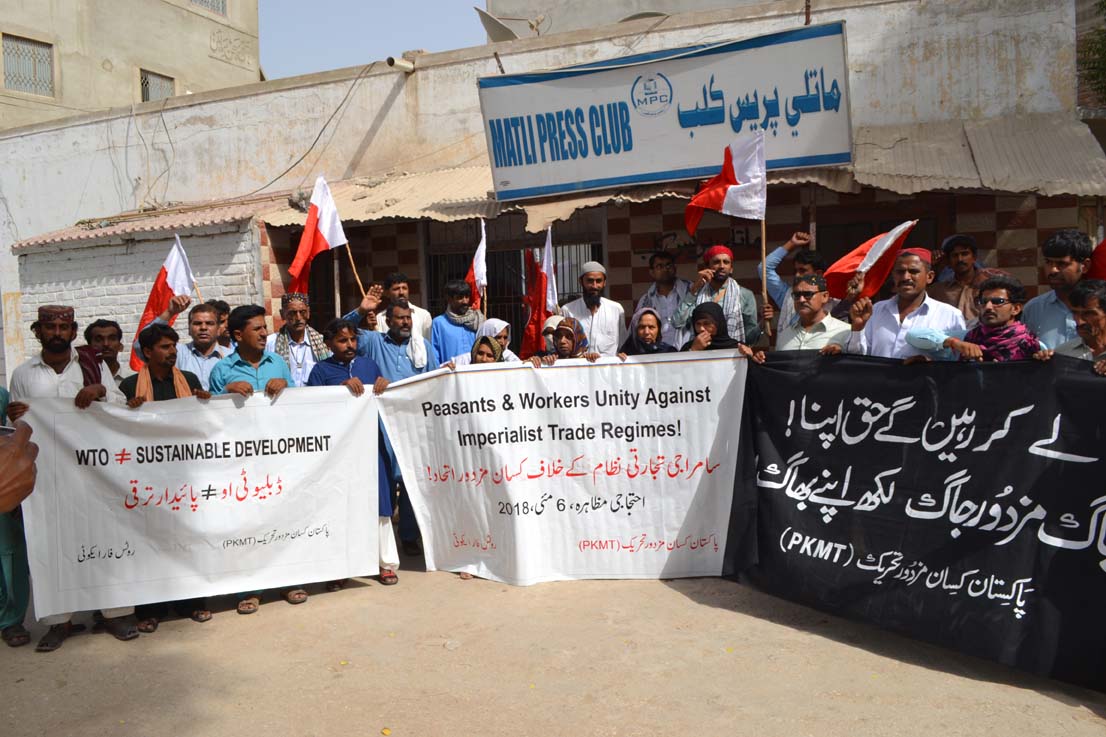
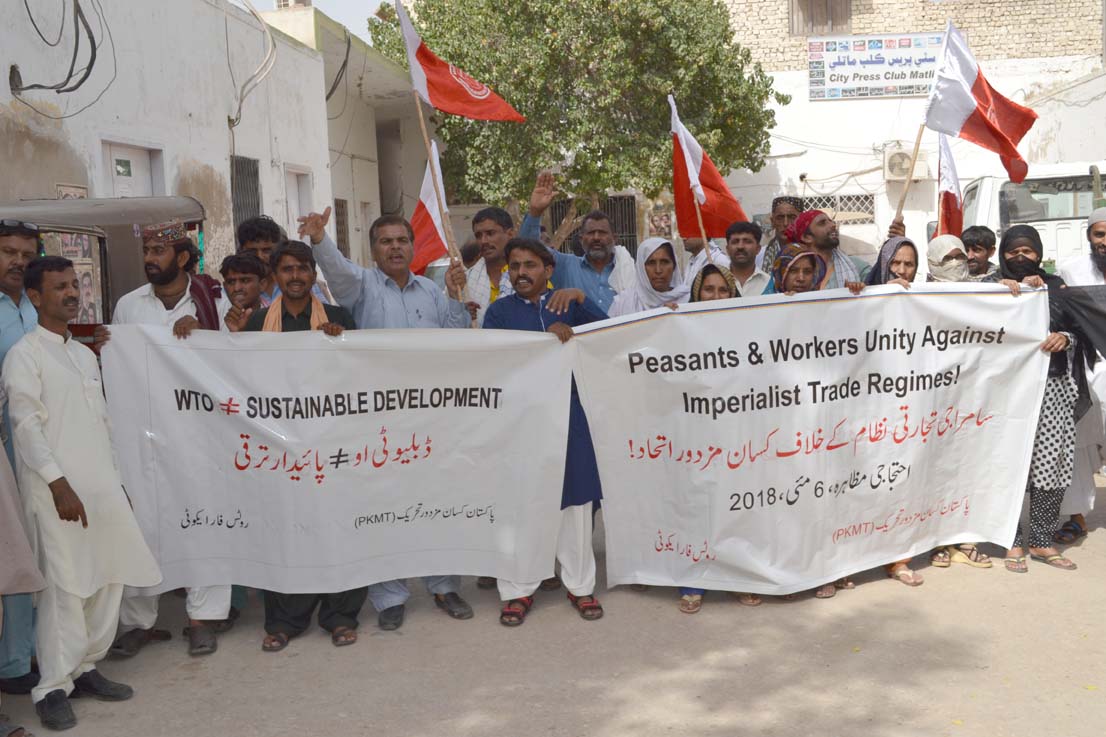
Roots for Equity and the Pakistan Kissan Mazdoor Tehreek (PKMT) in collaboration with  People’s Coalition for Food Security (PCFS), Pesticide Action Network, Asia and  Pacific (PAN AP) and Asian Peasant Coalition (APC) is marking the World Food Day as World Hunger Day on October 16, 2020. A webinar and protest has been organized in this regard in which small and landless peasants including PKMT members participated from different districts.

This event is part of a campaign, launched on the occasion of World Hunger Day, and titled “Rural People are Hungry for Food System Change”. It aims to promote a strategy for highlighting the toxic impacts of industrial chemical agriculture production systems and the acute need for food sovereignty and agro-ecology based food production systems. This year’s global campaign focuses on the plight of rural populations during the pandemic, and their demands for changes in the food and agricultural systems.

Tariq Mehmood, a member of PKMT, Khyber Pakhtunkhwa, spoke on the situation of hunger, poverty and unemployment during the Covid19 pandemic, He said that the transnational mega agro-chemical corporations’ domination in the food and agriculture system around the world, their exploitation and destruction of biodiversity and natural habitats is a catalyst for Corona pandemic.

According to a report by the United Nations FAO (The State of Food Security and Nutrition in the World), the epidemic could lead another 83 to 132 million people suffering from hunger by 2020, and if the current situation continues by 2030, 841.4 million people in the world will be hungry.

According to a member of PKMT Mohammad Zaman from Sahiwal, it is reported in the Pakistan Economic Survey 2019-20, the corona virus had a severe negative impact on the Pakistani economy and at least another 10 million people are feared to be pushed to living below the poverty line in Pakistan. The number could increase from 50 million presently to 60 million.

In the Global Hunger Index, Pakistan ranks 106th out of 119 countries where consumption of meat, poultry, fish, milk, vegetables and fruits is six to 10 times lower than that of developed countries. The worsening situation of hunger and poverty can be gauged from the statement of Sania Nishtar, Special Assistant to the Prime Minister for Poverty and Social Protection, that “almost half of the country’s population will be covered by the Ehsas Program.” The statement indicates that in Pakistan, where almost half of the population is employed in the agricultural sector, the current epidemic of rising hunger, poverty and unemployment has exacerbated the pervasive exploitation and brutality of this rotten food and agriculture system that is based extracting super-profits from the poorest segments of society.

Speaking on the global food and employment crisis, Wali Haider, of Roots for Equity said that rural populations around the world are already aware of these facts and now the food and employment crisis and growing hunger during the Corona virus pandemic has proved that the current system of food and agriculture, which is dominated by the big capitalist countries and their for profit companies, has failed.

This domination of the imperialist powers over the global food and agriculture system has linked the local rural economy, in third world countries like Pakistan, to the global agricultural market. This has resulted in the most important resources like our agricultural produce, our land and water have become a source of surplus profits for multinational corporations.  A clear example of this is the increasing production of sugarcane and other cash crops for the production and export of agro-fuels like ethanol, while the production of the most important food crops such as wheat is declining.

This is one of the reasons for the rise in food prices and the consequent increase in hunger. There is an urgent need to change the system where farmers are forced to depend on seeds, chemicals and toxic inputs of companies. These chemicals also pollute the entire food and agricultural system and destruction of the ecosystems and biodiversity.

In contrast, a sustainable food production system, agro-ecology, provides farmers with a strategy that protects not only their rights but also of other small food producers. Farmers’ right to land under agro ecology guarantees the establishment of collective and individual seed banks and their exchange. It also protects and promotes safe and natural systems of food and agriculture production ensuring food security of the most marginalized and vulnerable communities as well as safe nutritious food and environment for all.

Speaking on the women farmers’ rights Azra Sayeed of Roots for Equity said that the livestock and dairy sector accounts for 56% of the total agricultural production and the majority of farmers involved in milk and meat production are small scale. It consists of cattle breeders, especially women, who make it possible to produce 60 billion liters of milk annually in the country, but these same rural populations are starving themselves as a result of the monopoly of capitalist companies in the food and agriculture sector.

In the name of achieving so called standardization of milk, meat and other foods, corporations are paving a clear path to monopolizing the dairy and meat sector. This will only lead to further exacerbation of hunger and malnutrition in the country. It is important to note that according to the National Nutrition Survey 2018, 53% of children and 44.3% of women in the country are suffering from anemia.

Raja Mujeeb, a member of PKMT Sindh, referring to the small and landless peasants are most affected by the Covid19 epidemic, said that food producers have been forced to depend on poor quality seeds where the companies have established a monopoly and at the same time land is in the hands of feudal lords and increasing encroachment of capitalist systems of production and marketing.

If the farmers have control over all the productive resources including land and seeds, then our farmers, laborers, fishermen and the rural population can get food even in the face of the current pandemic or any kind of emergency. That is why PKMT believes that food sovereignty and self-sufficiency in food and agriculture based an end to feudalism through just and equitable land distribution among farmers and imperialist food policies is critical for a peaceful democratic sovereign state!

Released by: Roots for Equity & Pakistan Kissan Mazdoor Tehreek (PKMT)

Press Release in Urdu (PDF)

Inspiration to create a farmers market

Introduction:

This is a summary of an interview of Ms Maheen Zia conducted by Naveed Ahmed, Seed Sovereignty Program Coordinator from Roots for Equity. The context of the interview is on Maheen Zia’s work with Karachi Farmer’s Market-based in Karachi, Pakistan.

Ms Zia is one of the key founders of the Karachi Farmer’s Market. She is working to highlight the work of farmers and give importance to their work. She is promoting the work of farmers while sitting in the city and has the passion and ability to work for farmers. We are grateful to her that she has given her time for this interview.

Question: What attracted you to create a farmers market?

Answer: The news keeps coming that our food has become contaminated, and pesticides, fertilizers and GMOs are being used for it. We are cut off from nature and at the same time, the way disease is growing, it is in front of us too. We are six people who decided to start the farmers’ market. In all of our (six founders) families someone has been sick. It has made us realize that what we were eating makes us sick, so what could be its alternative? Personally, my father had cancer. At that point we started looking for organic flour and milled flour (chaki ka atta) and started thinking about what we were eating. Now cancer has become very common – in every household, in our close friends’ families – someone has been through this disease.

We were searching for pure food items, someone tried to find desi eggs or milks – but we wanted to have a single market where we could buy what we needed for our households. We wanted to have a system that for those who were selling here we could check what they were saying was actually being practiced and it was correct. This is why we started the market; it was started in August 2015 – it will now be five years. It is a small market but in the past five years about 30% of the people regularly buy things from here. They know that products have been checked and are of quality.

Question: Artificial agriculture or chemical agriculture produces more. So why should farmers adopt agroecology?

Answer: If your income is good by giving poison to others, then this is not correct. First of all, it is wrong in principle to produce something of low quality just because you will get production and it will be sold. This is not being said for any particular farmer but making a point in general. For example, if you have land and you want to grow something that is harmful to health for others but grow pure food elsewhere for yourself, it is wrong. In this age, this is how the world has been set up, and it may be difficult to examine it in this manner. But the way you are growing now has a short time outlook. The way you are growing now, putting pesticides and fertilizers this will degrade your land in the next ten to twenty years – what will you do then? You will not even be able to exchange this land for another piece of land? This land will not be able to grow anymore. So for your present gain you are harming your future. The harm being inflicted on others by what you are growing is an other matter but you are destroying your future, as well.

Naveed: So in the beginning you pointed out the impacts on human health and now you are pointing out that farmers must practice agroecology as (chemical agriculture) impacts land and you will face other problems.

Maheen Zia: Land will be ruined; your health will be ruined. When you use pesticide, it will first affect your family, you will be impacted as well. I believe that there is acute poverty and hence people are helpless and their hands are tied, even when they understand, they don’t have an opportunity to do something else. There is a need to help them and understand their position (majbori).

Question: What benefit you get from farmer’s market?

Answer: It makes us happy! This is an opportunity for people, there are about 300-500 people that are buying from the Farmers’ Market. There is better food getting to their households; and through this small businesses have been set up and running – so a system has been initiated. But this is small, it’s just a handful of people– Karachi in itself is a very big city. A much bigger thing that has happened is the conversation that has been started – we need to eat organically grown food, or sustainable food, we need to consume pure food. Where can we get it? Why should we have pure food? Why is it so expensive? How can we increase its production so that prices can come down? So the discussion that has been started is very important and it has the potential to increase organic production.

Question: Will small and landless farmers benefit from agro ecology?

Answer: Absolutely. They will benefit as over time, their land’s soil quality will become better, production will be better. If we can connect them to the market whatever they grow will fetch a better price, there is also a market available. There is only benefit and no harm. Whoever goes toward chemical agriculture there is only harm; you may be getting money from it at the moment but there is no barkat in this money – this is what I believe.

Naveed: If you practice agroecology you can retrieve land fertility and get an environmentally friendly ecosystem. The way the environment has been impacted, there is disease and global warming, the natural environment has been lost, using poison all of this has died and we can now regain all this through promotion of agroecology.

Question: From where did you get the seed?

Answer: If someone is coming from outside (the country) – I research on heirloom seeds – ancient seeds. Some seed banks keep these seeds and the seeds are from different area, they may not of your area but if the seed adapts to your climate than I think its okay. These seed are generally not invasive but it is very important that where you are they are suited (to that environment), they should be pest resilient; they have more nutrition. So, I search for the seed, try it out and if it starts off, then use it the next year. This is the beauty of real seed; from one seed you can get a whole field because each seed will give you plentiful. This is what nature is; in nature if you work a little hard, respect it, it will give you plentiful benefits.  If you fight with nature than you will have to work hard every year, put poison every year, use chemical fertilizer and so in the end you have to work a lot and the result is still not favorable.

Question: You mentioned that you get seeds from the ancient seed bank.

Answer: There is a company in the USA called Rare Seeds. They explain the origin of the seed like I have an Iraqi plant and a Chinese beans plant. These companies provide a complete chain of information, where did this seed come from, in which year, which person cultivated it, for how many years they cultivated it, who brought this seed to us, they value the seed, and this is what their work is.

Question: Can we say that the indigenous people of those areas own these seeds?

Answer: No, because the indigenous people are in a very bad condition and they have also lost their seed, there should be an attempt to find those seeds as well; for example there is a particular bean seed Cherokee Tears. When the Cherokee people were driven out of their lands about 150 – 200 years ago, they brought seeds with them. So it’s not necessary that the indigenous people are preserving their seeds. There are some farming communities and there are some people who think like us that the real asset is your seed, it needs to be saved, especially at a time when hybrids are on the rise and GMOs are being promoted. So this is a very important work that they are doing. People are also buying from them. Small farmers buy from them and plant seeds. And then they save the seeds.

Question: Have you ever tried to get seeds from areas of Pakistan or the suburbs of Karachi?

Answer: Once I was filming in Sindh – near Badin – there was a project where they were reviving Indigo which is an ancient seed of this area and it was a plant that died out in the British era. I took the seed from there but its plant did not grow, I thought I would bring the seed again when I go back to Badin. I try that if I get a real seed I grow it. When I went to Hunza two years ago, I also brought seeds from there, but it did not grow. But maybe its climate was different, only a small sprout came out; it still is good to try things out. We need to build a network within our climate zone so that we can save the real seeds among us. Make many seed banks so that if one seed bank fails there are still other seed banks. Like once I had a beautiful sunflower seed, it had a beautiful flower; I distributed this seed to friends so it could be continued. We have a network of people who try to spread seeds in this manner. I also take seeds from the pansar. For example there is a taramera seed– these are still pure seeds – it’s a local variety; there is also kolongi, there is gaozaban but it did not germinate. I have now brought this seed from abroad and have saved seeds from it and will try it again this year. It’s a very useful plant – you can make tea from its leaves and use it for colds or flu. So this is what I do but a systematic system needs to be set up. This is a science and there are different types of seeds, some are self-seeding and you don’t need to keep them away from other plants. But other variety mix with each other for instant maize, it has to be kept a mile away from other varieties so that they do not cross-pollinate. If we are working on seed preservation, it is important to follow the procedure.

Question: Pakistani farmers are facing financial loss – how can we address this issue??

Answer: I have met only few farmers who came to the market and do not have a very good understanding of Pakistani farmers; I have met a few farmers but have not studied the issue deeply as yet and need to understand it as well. I think our economic situation is dependent on a cash economy and it drives everything. Before we used to have a barter system as well it may not have been so difficult for farmers. There are now so many barriers for farmers. Maybe I need to ask you this question why farmers are facing so many losses?

Green Revolution began under General Ayub. The whole world has been suffering the consequences of the fifty years of Green Revolution, of chemical agriculture. One third of the land is damaged which was arable and we could grow on it; if there is decreasing production and farmers are suffering losses– a big reason has to be that their land and water has been spoiled.

Question: If farmers adopt agroecology they will suffer financial loss. How can we compensate for this financial loss?

Answer: We need to think on ways forward. There needs to be a diversity of income. For example may be also including handicrafts.  Also be involved in value added production so that they can have better value. All of us need basic education. It’s not a simple sum game. You will not get to know about everything from instructions on a packet. When we are growing things – it’s a natural process and we need to deepen our learning of nature, of soil. Why is soil so important, it’s not just dirt– it’s like our heart? All that we eat is based on this layer of soil. If we increase the quality of soil we will eat better. If we loose this soil then we will all face starvation. The quality of our soil is critical. We don’t understand the importance of water. These are Allah’s systems; they have been there for thousands of years. These systems were there before us and will be there after us. We are the ones who have destroyed these systems. We have used advanced technologies and believe that by using them we can make it better. But we need to go back to nature and study how systems are managed in nature.

زرعی خبریں آگست 2020

اگست 1 تا 31 اگست، 2020

زراعت

ایشیائی ترقیاتی بینک (اے ڈی بی) نے اپنی تازہ ترین مختصر رپورٹ (کووڈ۔19 امپیکٹ آن فارم ہاؤس ہولڈ ان پنجاب، پاکستان: اینالسس آف ڈیٹا فرام اے کراس سیکشنل سروے) میں کہا ہے کہ زرعی مداخل کی بڑھتی ہوئی قیمتوں نے شدید خدشات پیدا کردیے ہیں کیونکہ کسان کورونا وائرس کے دوران اپنی نقد آمدنی سے محروم ہوگئے ہیں جو پاکستانی معیشت کے لیے اہم مسائل کی وجہ بن ہوسکتی ہے۔ رپورٹ کے مطابق کورونا وائرس کی وباء سے پہلے 2019-20 میں پاکستان کی مجموعی قومی پیداوار میں اضافے کی شرح 3.2 فیصد تھی جس میں زراعت کا حصہ 2.9 فیصد تھا۔ تاہم کورونا وائرس کے بعد مجموعی قومی پیداوار میں اضافے کی شرح کا اندازہ منفی 0.4 فیصد لگایا گیا ہے جس میں زراعت وہ واحد شعبہ ہے جس میں بڑھوتری کی شرح مثبت 2.7 فیصد ہے۔ پنجاب میں 400 سے زیادہ کسانوں سے کورونا وائرس کی وجہ سے نافذ کیے گئے لاک ڈاؤن اور ٹڈی دل حملے کے اثرات پر سروے کیا گیا تھا۔ لاک ڈاؤن کی وجہ سے ایک تہائی کسان آمدنی سے محروم ہوئے اور سروے کیے گئے 22 فیصد گھرانوں کے افراد شہروں سے واپس گھر آگئے تھے۔ لاک ڈاؤن نے زیادہ قدر والی زرعی اشیاء جیسے پھل، سبزی اور دودھ کے ترسیلی نظام (فوڈ سپلائی چین) کو متاثر کیا ہے۔
(بزنس ریکارڈر، 11 اگست، صفحہ14) Continue reading

زرعی خبریں جولائی 2020

جولائی 1 تا 31 جولائی، 2020

زراعت

وفاقی کمیٹی برائے زراعت (ایف سی اے) نے 2020-21 میں خریف کے موسم کے لیے کپاس، گنا، چاول جیسی اہم فصلوں کے پیداواری اہداف مقرر کردیے ہیں۔ 1.18 ملین ہیکٹر رقبے پر 69.80 ملین ٹن گنے کی پیداوار کا ہدف مقرر کیا گیا ہے۔ چاول 2.95 ملین ہیکٹر رقبے پر 7.99 ملین ٹن، کپاس 2.31 ملین ہیکٹر پر 10.8 ملین گانٹھیں اور 1.33 ملین ہیکٹر رقبے پر مکئی کی 5.01 ملین ٹن پیداوار ہوگی۔ دال ماش کا پیداواری ہدف 0.605 ملین ٹن اور مرچ کا پیداواری ہدف 2.481 ملین ٹن مقرر کیا گیا ہے۔
(ڈان، 9 جولائی، صفحہ9) Continue reading